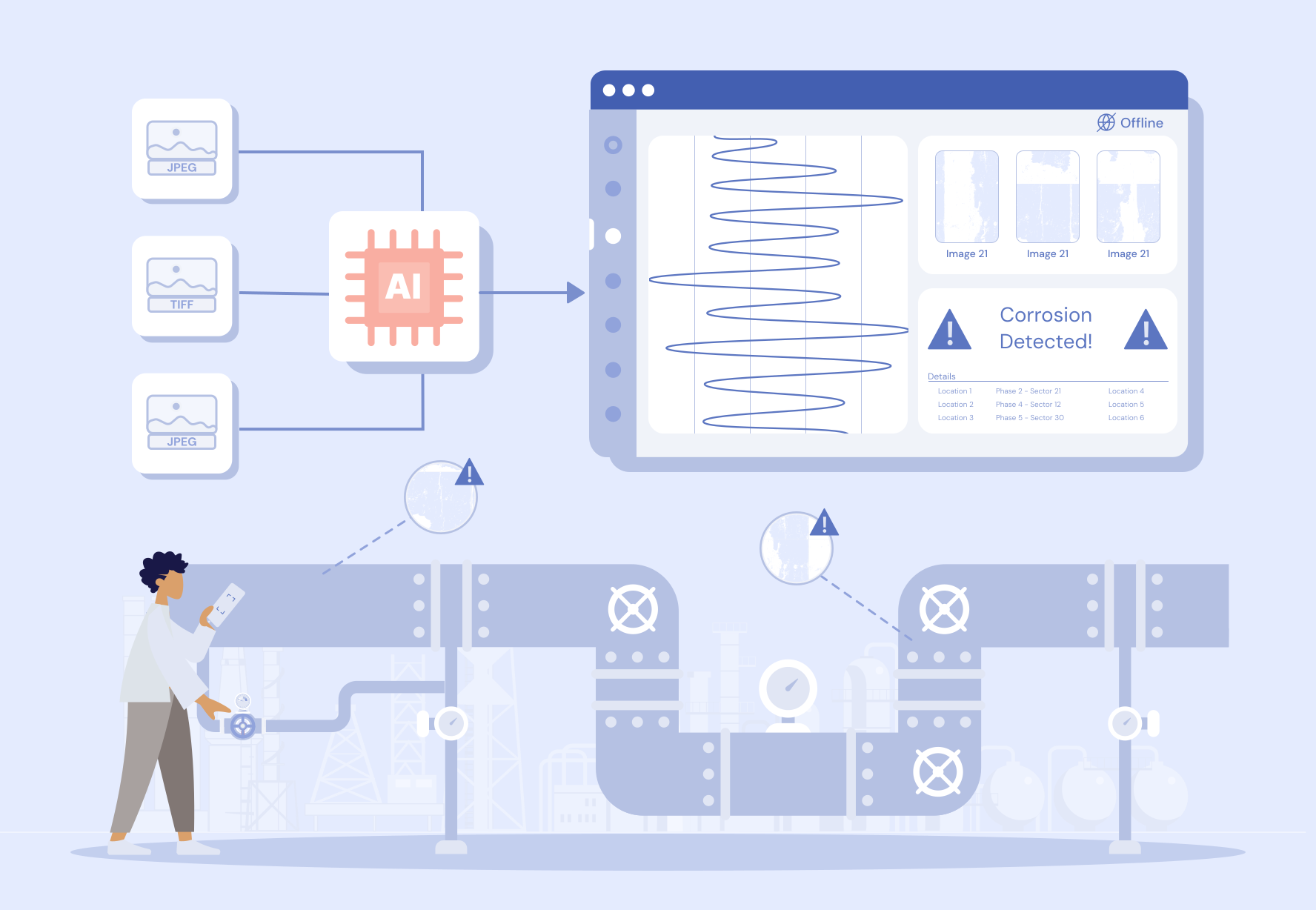
Over 64% of damage incidents in crude oil pipelines are caused by corrosion. For oilfield operators, delayed detection leads to asset degradation, safety risks, and unplanned downtime. Existing manual inspection methods are slow and inconsistent-especially in remote sites with limited connectivity.Zemoso partnered with a global oilfield services company to build an offline, AI-powered pipeline inspection platform. The system enables engineers to upload image data, detect corrosion using on-device machine learning, and review damage visually through an interactive gallery interface. The result: faster triage, traceable decisions, and fewer failures in the field.
Corrosion causes over 64% of damage incidents in crude oil pipelines, but existing manual inspection methods are slow and inconsistent, especially at remote sites with limited connectivity - delayed detection means asset degradation, safety risk, and unplanned downtime. The client needed a system that could process high-resolution image data, detect corrosion with precision, and run entirely within localized environments with no reliance on cloud infrastructure, balancing machine learning compute needs against local resource constraints.
The solution ingests high-resolution TIFF images from pipeline cameras and applies pre-trained ML models to detect corrosion. These detections are rendered as transparent polygon overlays and fused with JPEG visualizations, accessible via an intuitive gallery interface within the AI Workbench.
Zemoso delivered an offline-capable, AI-powered pipeline inspection platform built for the realities of field operations. By combining machine learning, real-time visualization, and a lightweight deployment model, the system enables faster, more reliable corrosion detection and safer, more efficient asset management.