Services Rendered

Product Design

Product Engineering
.svg)
Product Architecture
A Fortune 500 oilfield services provider partnered with Zemoso Labs to tackle a critical gap: how to operationalize methane emissions monitoring at scale so emissions data could drive continuous, governed, real-time decisions during oil and gas production. Traditional inspections and legacy systems created delays, fragmented visibility, and inconsistent workflows, slowing remediation and increasing regulatory exposure. Together, we built a platform so emissions signals could reliably become alerts, priorities, actions, and audit-ready reports at enterprise scale.
While the energy sector faces increasing pressure to reach net zero, untracked Methane emission continues to be a threat to that ambition. Methane, being invisible to the naked eye, is notoriously difficult to track. Legacy detection methods often fall short in complex environments like off shore rigs, mountainous terrains, and areas with dense vegetation
However, the primary hurdle isn't just detection; it’s operationalization. Traditional inspections rely on manual, fragmented workflows that create significant data silos. When detection is slow and data architecture is brittle, organizations cannot convert signals into rapid remediation, leading to increased regulatory exposure and stalled decarbonization goals.
A Fortune 500 oilfield services leader partnered with Zemoso to bridge the gap. While the client possessed an existing system for monitoring oil leaks, it was not engineered for the high-velocity, high-volume demands of methane remediation.
The ask was to build a high-scale, role-based platform capable of processing continuous IoT data streams, orchestrate workflows, and prioritize incidents intelligently for users.
.svg)

Our clients love what we do:
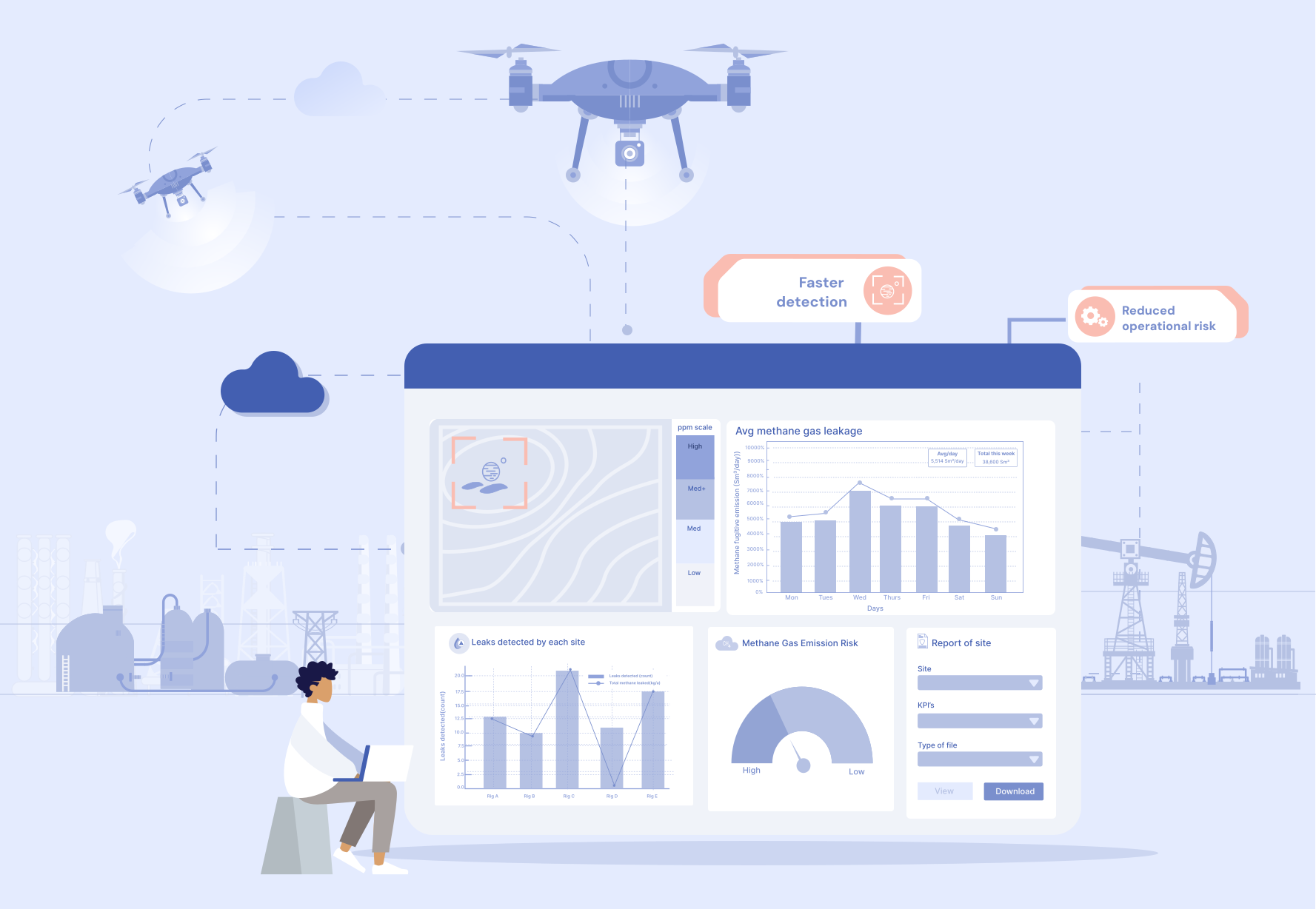
We co-created an emissions monitoring platform for both ground sensors and aerial drones to turn raw signals and images into actionable decisions. This involved continuous ingestion of IoT and drone data, and converting readings into PPM (Parts Per Million) and geospatial views. By replacing periodic checks with always-on monitoring, the client can detect methane and other emissions earlier, prioritize what needs attention, and respond faster.
Behind the scenes, several engineering breakthroughs made this possible:
Zemoso helped the client move beyond “methane detection” to operational decarbonization. The platform addresses a common net-zero failure point: emissions data gets captured, but it doesn’t translate into consistent action across teams and sites. By unifying aerial and ground monitoring in a single decision-grade system, teams can detect leaks earlier, prioritize response, execute remediation, and generate audit-ready reports at enterprise scale.




©2026 Zemoso Technologies. All rights reserved.