In the world of drug development, time is measured not just in months but in millions of dollars. A single 12-month clinical trial can generate over 3 million data points, while a Biologics License Application (BLA) may span 10 million pages of documentation. Every page must meet strict ICH and FDA regulatory guidelines, and the bottleneck has long been the availability of specialized medical writers. Their expertise is irreplaceable, but the process is slow, manual, and costly. A leading innovator in generative AI set out to transform this paradigm by re-engineering how regulatory documents are created, bringing automation, security, and human oversight into a single multimodal platform.
Modern clinical trials generate enormous data footprints - a single 12-month trial can produce over 3 million data points, and a Biologics License Application can span 10 million pages, all of which must meet strict ICH and FDA guidelines. Delays in document readiness can add anywhere from $600K to $8M a day in opportunity cost, yet the process still depends on scarce, specialized medical writers working through fragmented data hand-offs, rigid CRO- and sponsor-specific templates, and weeks of manual collating and validating before a submission is ready. The challenge wasn't just building an AI that could write - it was engineering a system that could integrate multimodal data, enforce regulatory compliance, maintain traceability, and stay secure in a highly regulated industry.
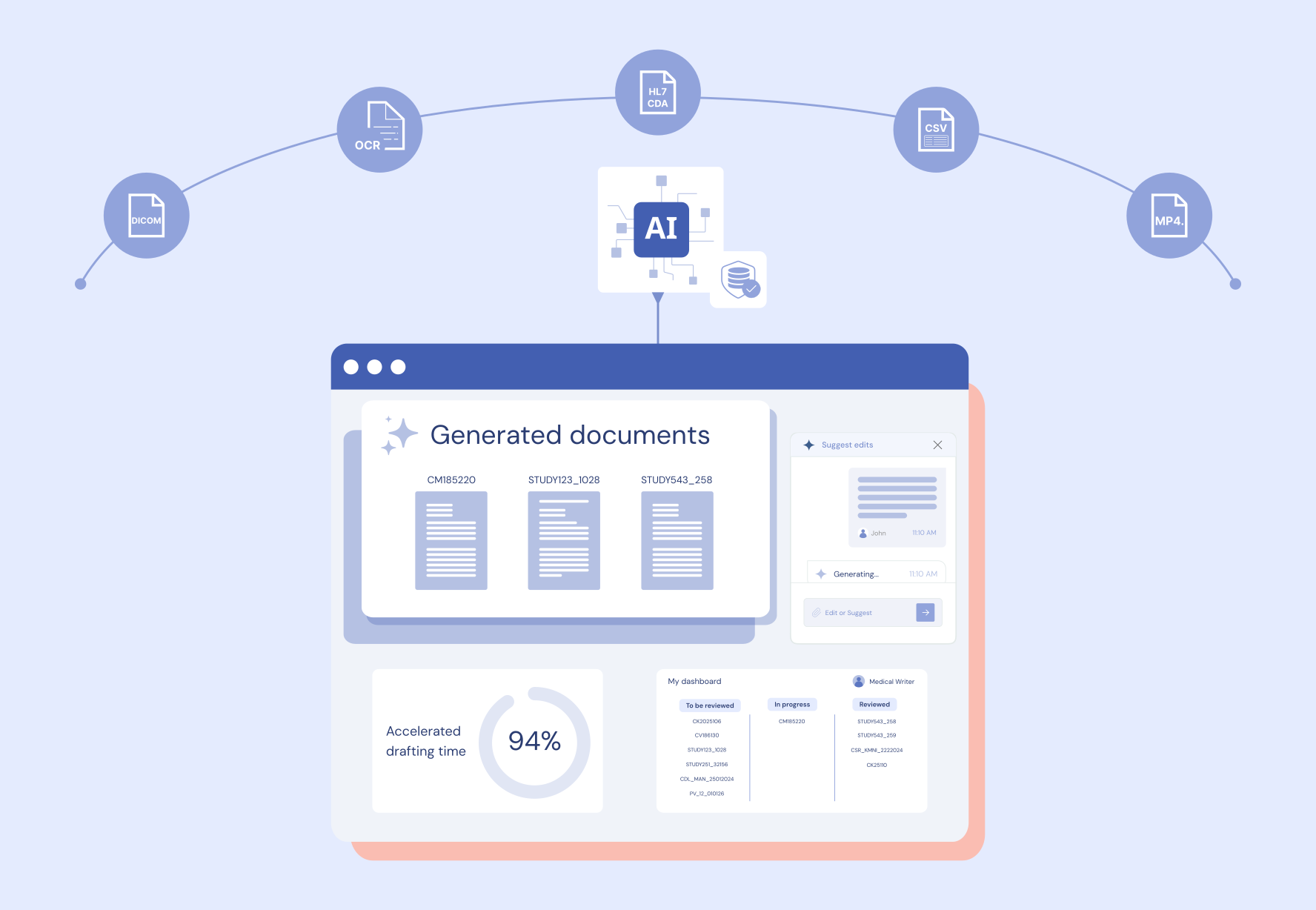
The platform was built as a multi-agent, human-assisted Gen AI solution that combined security, modular workflows, and regulatory intelligence:
This engagement shows how multimodal Gen AI platforms can redefine regulated workflows without compromising compliance or accuracy. By embedding security at the architectural layer, automating regulatory adherence, and keeping humans in the loop, the solution accelerates today's submissions while laying the groundwork for future capabilities like AI-augmented clinical trial monitoring and predictive quality assurance.